
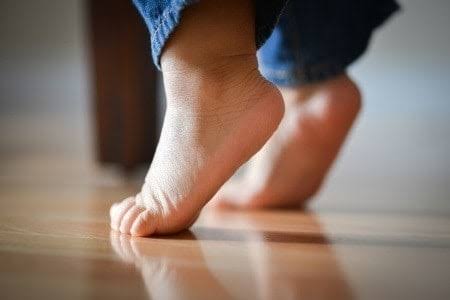
When is Tip-Toeing Normal?
Posted By ADITYA AGUS SETYAWAN | 02 Jun 2026 16:33:28 | Cases
As a parent, watching your child grow and reach developmental milestones is a joyful experience. But sometimes, you may notice something unusual — for example, your child often walks on their toes instead of placing their feet flat on the ground. While occasional tip-toeing is common in early walkers, persistent tip-toe walking may raise questions or concerns. Is it normal? Should we be worried? What can be done?
Tip-toeing, also called toe-walking, refers to a walking pattern where a child walks on the balls of their feet, with little or no contact between the heels and the ground. This can be part of normal development, but in some cases, it may signal an underlying issue that requires attention.
Many children go through a phase of tip-toe walking when they first begin to walk — especially between the ages of 12 to 18 months. This usually resolves on its own as they gain more control and strength in their legs and feet. Occasional toe-walking during play or when barefoot is generally not a cause for concern (Sankar & Rose, 2020).
However, when toe-walking continues beyond the age of 2 to 3 years, or becomes the child’s primary way of walking, it may be time to explore the reasons more closely. Persistent toe-walking can lead to tight calf muscles, reduced flexibility, and difficulty with balance, coordination, or wearing shoes comfortably.
Types and Causes of Toe-Walking
Toe-walking can have several causes. Understanding the type of toe-walking your child exhibits can help guide treatment or management.
Idiopathic Toe-Walking (ITW)
This is the most common type of toe-walking, seen in children who are otherwise developing typically. “Idiopathic” means that no medical or neurological cause has been identified. Children with idiopathic toe-walking usually have normal strength, flexibility, and balance, and can walk flat-footed if asked — but they prefer to walk on their toes.
Idiopathic toe-walking is often seen in children with a strong desire for sensory input or movement. These children may also love bouncing, spinning, or crashing into objects. Sensory-seeking behaviors may drive toe-walking because walking on the balls of the feet provides increased proprioceptive (joint and muscle) and vestibular (balance) input (Shulman et al., 2015).
Sensory Processing Differences
Children with Sensory Processing Disorder (SPD) may toe-walk due to how their brain interprets sensory information. For some, toe-walking helps avoid uncomfortable tactile sensations on the soles of the feet (sensory avoiders), while others may seek the pressure and stimulation that toe-walking provides (sensory seekers). These children may also show other signs of sensory sensitivities — like avoiding messy textures, covering ears to sounds, or constant motion-seeking behaviors (Miller et al., 2007).
Developmental or Neurological Conditions
In some cases, toe-walking is associated with medical or developmental conditions, including:
Autism Spectrum Disorder (ASD): Many children with autism toe-walk due to sensory differences, motor planning difficulties, or reduced body awareness. In fact, studies show that up to 20–30% of children with ASD demonstrate persistent toe-walking (Sankar & Rose, 2020).
Cerebral Palsy: Children with cerebral palsy, particularly spastic types, may walk on their toes due to muscle tightness or high muscle tone in the legs and ankles. Toe-walking in this context is usually due to physical limitations rather than behavioral habits.
Muscular Dystrophy or Neuromuscular Disorders: These conditions can weaken the muscles or affect the nerves that control leg and foot movement, making toe-walking a compensatory strategy.
Short Achilles Tendon: Some children have tight calf muscles or shortened Achilles tendons, which physically prevent them from placing their heels on the ground. This can be a result of prolonged toe-walking or a structural issue from birth.
When Should Parents Be Concerned?
If your child occasionally walks on their toes while playing or running, it is likely a normal part of their development. However, you should consider seeking professional input if:
- Your child is over 2.5 to 3 years old and toe-walking is still their main walking pattern.
- They never walk with flat feet, even when barefoot or walking slowly.
- They seem unable to place heels down, even when prompted.
- You notice stiffness in their ankles or limited range of motion.
- There are concerns about speech, behavior, or social development (especially if you suspect signs of autism).
- There’s a family history of neuromuscular conditions.
In such cases, it’s best to consult a pediatrician, occupational therapist, or physical therapist for a comprehensive evaluation.
How is Toe-Walking Assessed?
A healthcare provider will typically evaluate the child’s motor development, muscle strength, flexibility, reflexes, gait pattern, and sensory processing. If needed, additional assessments like gait analysis, range of motion testing, or developmental screenings (e.g., for autism or SPD) may be done.
In some cases, imaging or neurological testing may be recommended to rule out underlying conditions.
What Can Occupational Therapist Do?
Early intervention is key. If toe-walking is habitual or due to sensory or motor issues, therapy can help improve walking patterns and prevent long-term complications like muscle tightness, poor balance, or coordination delays. If sensory issues are suspected, an occupational therapist can assess how the child processes sensory input and create a personalized sensory diet. This might include activities that provide deep pressure (e.g., jumping, pushing heavy objects) or tactile input in a controlled and supportive way to reduce the need to toe-walk.
Supporting Your Child at Home
- Offer barefoot time on safe surfaces to encourage natural heel-to-toe walking.
- Encourage play that involves heel contact, such as walking on uneven ground, jumping down from small steps, or walking up inclines.
- Use verbal reminders or games like “quiet heel walking” or “stomp like an elephant.”
- Incorporate calming sensory activities if your child seems to be seeking input or overstimulated.
Be patient and supportive. Many children respond well to consistent therapy and family encouragement.
Conclusion
Tip-toeing in children is common during early walking stages, but if it persists, it may signal sensory, developmental, or motor-related challenges. Understanding the possible causes — from idiopathic habits to sensory sensitivities or neurological issues — can help guide the right support for your child.
With early intervention, most children with toe-walking tendencies can develop more typical walking patterns and improve their participation in daily activities. If you’re ever unsure, trust your instincts and reach out to a professional who can guide you through assessment and treatment.
References
Miller, L. J., Anzalone, M. E., Lane, S. J., Cermak, S. A., & Osten, E. T. (2007). Concept evolution in sensory integration: A proposed nosology for diagnosis. American Journal of Occupational Therapy, 61(2), 135–140. https://doi.org/10.5014/ajot.61.2.135
Sankar, W. N., & Rose, P. (2020). Toe walking in children. Orthopedic Clinics of North America, 51(2), 147–154. https://doi.org/10.1016/j.ocl.2019.12.002
Shulman, L. H., Sala, D. A., Chu, M. L., McCaul, P. R., & Sandler, B. J. (2015). Developmental implications of idiopathic toe walking. Journal of Child Neurology, 30(12), 1597–1606. https://doi.org/10.1177/0883073815578516